
Which coffees are you ordering wrong, and how to order them like an expert?
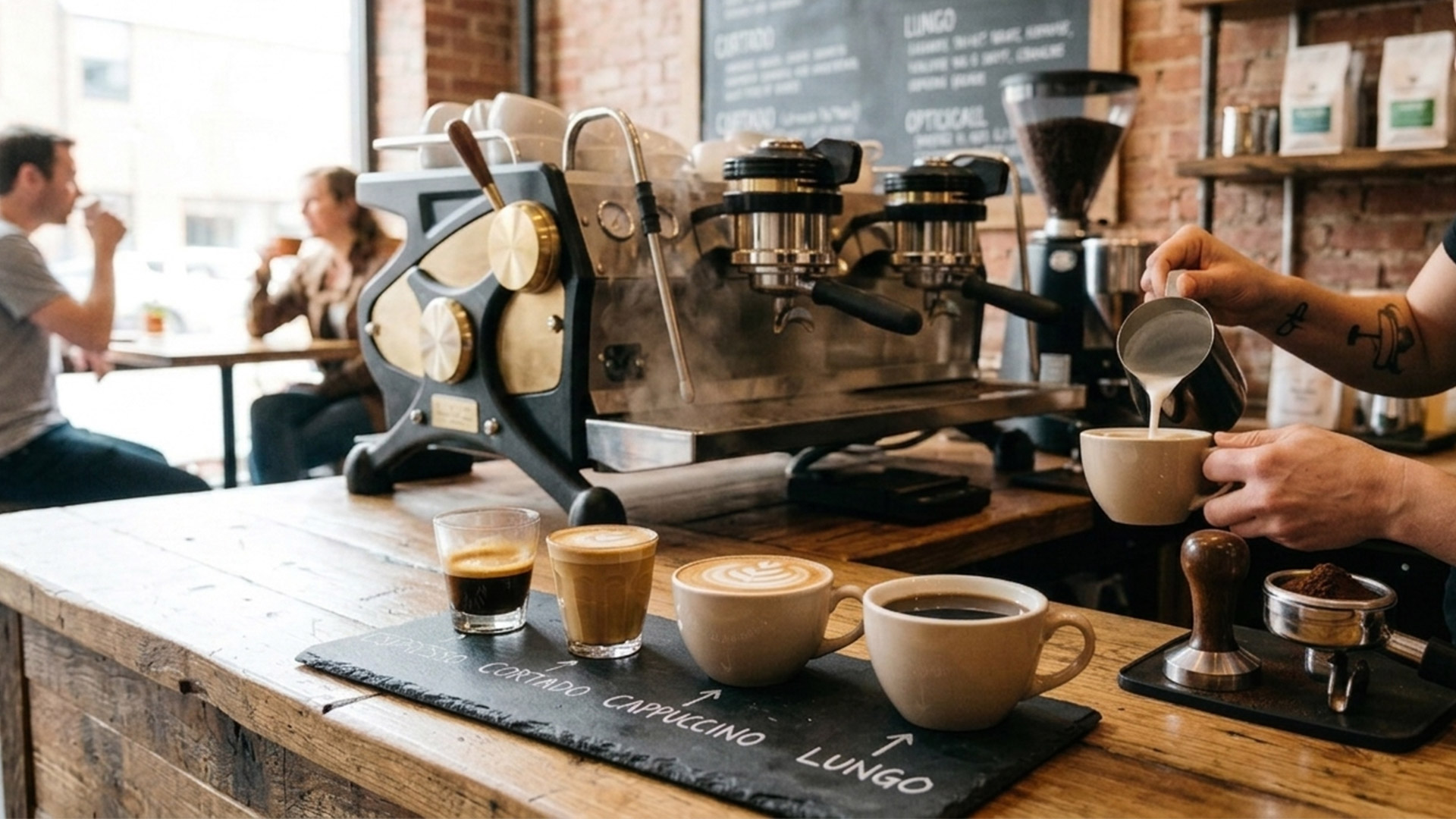
/images/como-pedir-cafe-como-experto.webp or change the src attribute of this image.Reading time: 6 min
The difference between a cortado and a café con leche is not the size of the cup. It is the technical ratio between espresso and milk, and the sensory intention behind each preparation. Ordering the first when you want the second is the most frequent mistake —and the easiest to fix— in coffee culture.
If you ever received a cup that did not match what you expected, it was probably not the barista's fault. It was a disconnect between coffee's technical vocabulary and what you had in mind. A cortado is not a small coffee with milk; the coffee-shop macchiato has nothing to do with the original Italian macchiato; and an americano is not simply an espresso with more body. Understanding these differences is the first step to transforming the way you order —and enjoy— every cup.
| 3 technical mistakes most consumers make when ordering coffee (SCA) | 60% of customers in specialty coffee shops do not know the difference between a lungo and an americano | 80+ points on the SCA scale for a coffee to be considered "specialty" |
Why do we order coffee wrong?
The name of a coffee drink essentially describes a technical relationship: how much espresso, how much milk, what temperature, what texture, and how long the extraction takes. Ordering "a café con leche" in a specialty coffee shop can get very different results depending on the country, the region, or even the barista. The confusion, however, is no coincidence: coffee vocabulary is partly Italian, partly Anglo-Saxon, and partly specific to each commercial chain.
The Specialty Coffee Association (SCA) —the leading international authority on specialty coffee— precisely defines the technical parameters of each extraction: dose, temperature, pressure, time, and ratio. Knowing those definitions does not make you a barista, but it does make you a consumer who knows exactly what they are ordering.
A global tradition with its own vocabulary
Espresso was born in Italy in the early twentieth century as a technical solution: extracting coffee quickly and in a concentrated form using pressurized water. All the others derive from that invention: the cappuccino, the cortado, the macchiato. But when coffee crossed the Atlantic and became popular in global commercial chains, the names began to mean different things.
Today, the global coffee industry moves more than 460 billion dollars annually according to Statista (2023), and within that market the specialty segment —coffee with origin traceability, an SCA score, and certified extraction technique— grows at a rate of 10% per year. Understanding coffee's technical vocabulary is also an economic decision: it is the difference between paying for a specific sensory experience and receiving something generic.
The three most common mistakes when ordering coffee
01 What is the real difference between a Cortado and a Café con Leche?
This is the most frequent confusion, and its root is technical: although both drinks contain espresso and milk, the ratio changes everything. A cortado is an espresso with a splash of hot milk added in an approximate 2:1 ratio. The role of the milk is not to soften the volume but to "cut" the acidity of the espresso without diluting its character. The result is a short, intense drink with a smooth finish.
A café con leche, on the other hand, works at a 1:1 ratio or even with more milk. It is a larger, creamier drink with a milder profile, ideal for those who want the flavor of coffee without its most pronounced intensity. If you order a cortado expecting a café con leche, you will get a cup that is technically correct but wrong for your palate.
02 Why isn't the Macchiato what you think it is?
Macchiato means "stained" in Italian. In its original version —the espresso macchiato— it is a shot of espresso with just a touch of foamed milk on top: enough to temper the acidity, not enough to alter the concentrated character of the base. It is a short, intense drink with a smooth texture on the first sip.
The problem arises because commercial chains popularized sweet, long versions with caramel under the same name. Ordering a macchiato expecting that drink in a specialty coffee shop will generate confusion. If you want volume and a balance of espresso, milk, and foam in harmonious proportion, the right drink is a cappuccino —defined by the SCA as a shot of espresso combined with 60 ml of steamed milk and a 1 cm layer of foam.
| Key technical fact: According to the Specialty Coffee Association, a standard cappuccino should be prepared with a 1:2 ratio of espresso to steamed milk, at a serving temperature between 65°C and 70°C. That precision is not arbitrary: at higher temperatures, milk destroys some of the aromatic compounds of the espresso that define the sensory profile of the cup. |
03 Are you ordering an Americano when you really want a Lungo?
An americano is an espresso to which hot water is added after extraction to increase its volume and soften its intensity. The extraction itself is identical to that of any espresso: 25 to 30 seconds, 9 bars of pressure. The water is added once the shot is ready. The result is a long coffee with a mild profile, designed for those who prefer more volume without changing the technical base.
A lungo, on the other hand, changes the extraction from the start: it uses the same amount of ground coffee but lets more water pass through during the process —generally between 50 and 60 ml instead of the 25 to 30 ml of a standard espresso. This lengthens the extraction time, extracts more compounds from the grounds, and produces a drink with a different body: less concentrated than espresso, but with a complexity of flavor that an americano lacks. If you want more volume without losing character, the lungo is your order.
From the origin of the bean to clarity in your order
Knowing the technical difference between each drink is only half of the equation. The other half lies in the base: the bean the barista uses as a starting point defines the limits of the possible experience. An espresso extracted from a high-altitude coffee, grown more than 1,200 meters above sea level, has brighter acidity, greater natural sweetness, and more complex aromatic compounds than one produced at lower altitudes.
The barista who chooses their origin well —and the consumer who demands it— are making a technical and ethical decision at the same time: they drive more transparent production chains, better-paid farmers, and a cup with a defined, traceable sensory profile. Knowing what you order and knowing where it comes from are two skills that complement each other.
What you can do starting today:
- Ask about the bean's origin: a specialty coffee always has a story about where it comes from. If the coffee shop can't answer, that is also information.
- Describe your preference, not the name: "I want something intense but with milk" tells the barista more than any technical name you may have heard.
- Calibrate the temperature: ordering your drink at a lower temperature (65°C) lets you better perceive the nuances of the base espresso without the milk masking the sensory profile.
- Choose a bean with backing: A good bean is the foundation of any extraction and determines the body, aroma, and complexity of the cup.
- Experiment without fear: the only way to refine your palate is to try variations with intention. Order differently for a week. Write down what you find. Coffee rewards curiosity.
Frequently asked questions about how to order coffee
What is an espresso and why is it the base of everything?
An espresso is the extraction of finely ground coffee with hot water (90–96°C) at 9 bars of pressure for 25 to 30 seconds. It produces between 25 and 35 ml of concentrated coffee with a layer of crema on the surface. All the other milk-based coffee drinks —cortado, cappuccino, latte, macchiato— use espresso as their base and build on it.
What is the difference between specialty coffee and commercial coffee?
Specialty coffee is coffee that scores 80 or more points on the SCA scale, evaluating attributes such as acidity, body, sweetness, aroma, and absence of defects. It implies traceability —knowing the bean's exact origin, altitude, processing method, and roast profile. It represents approximately 10% of the coffee produced in the world, but accounts for a growing share of conscious consumption.
Does altitude matter for coffee flavor?
Yes, significantly. At higher altitudes, the bean ripens more slowly because of the lower ambient temperature. That slow process allows a greater concentration of sugars and aromatic compounds in the bean. High-altitude coffees —grown above 1,200 meters above sea level, like those produced in Veracruz— tend to have brighter acidity, natural sweetness, and more complexity in the cup than those grown in lowland areas.
What should I order if I have never been to a specialty coffee shop?
The best strategy is to describe your preference instead of using technical names: do you want something short and intense? Order an espresso or a cortado. Do you want something with milk and volume? A cappuccino or a café con leche. Do you want a lot of volume without exaggerated intensity? An americano or a lungo. Good baristas prefer that conversation to a misapplied name.